Patrin
General InformationOther NamesSoutherners
OriginsMen of the Wooded Mountain that sailed to Patrinor
AffiliationPatrin Empire
RivalriesWestermen
LanguagesClassical Paternic, (if educated) Old Gemenite
MembersPalagon Patermāgor, Lahar, Pahīn
Physical DescriptionDistinctionsWise in ship-lore and well-learned
HairBlack
SkinBrown
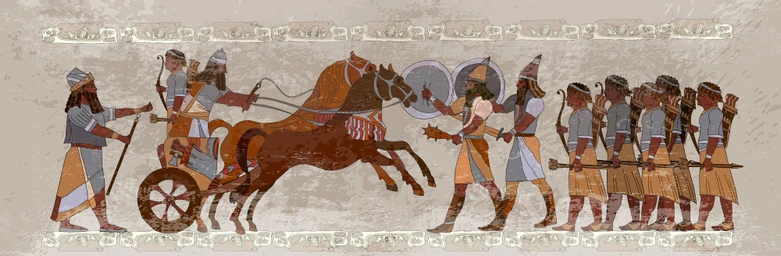
“It is true they love the sea, but only in how it can be made to their service: a thoroughfare to bear their precious stones and great works. And it is the same for them with all things.”
-Enneth in The House of Regimen, “What Happened Downstairs”
The Patrin are the Men of Patrinor, descendants of those who crossed the Great Chasmous Sea in the Days of Wrath. Their kingdom, the Patrin Empire, was the greatest of all the realms to come after the Binding.
List of Branches
In truth, the Patrin are a diverse family of related cultures that have spread all throughout Patrinor and Empheros. The most prestigious branches are those of Leponnia and Rubea (specifically from Cyrikon), which were the heartlands of the Empire and believed to have mingled less with the indigenous tribes of Patrinor. These are the traditional branches of the Patrin, as the Empire accounted them:
- The Cyrikorim, of Rubea
- The Leponnians, of the Leponnian Peninsula
- The Horatines, of Horat and Alensis
- The Makagoi, of Makagos
- The Gemenites, of Gemenor
These peoples are related to the Patrin, though they did not cross the sea and therefore are seen as distant relations rather than kin:
- The Bībūrim, of Bībūnor
- The Lakemen, centered around the Five Fingers
History
Origins
The Patrin are descended from the peoples that resided about the Wooded Mountain (P. Men Mhol) throughout the Last War. Initially, they were two peoples, comprised of those loyal to the tower of Bash Phaug, and those who fought for Mīthrabash. Near the end of that age, both their homes were invaded by Sāshar Wingless, a fire-drake of exceptional strength. Even united, they could not overcome her, and so together both kindreds fled that land, migrating eastward. Some split off toward the south, eventually settling Bībūnor, others still chose to stay with the Lake-Elves of the Five Fingers when they met them, becoming the Lakemen, but the majority traveled all the way to Nīmlaugos on the Great Chasmous Sea.
There they felled many trees, so that even today its woodlands are sparse, and built themselves a great fleet. Sailing across the sea they found the island Phagal, where they rested for a time, before continuing on to newly-discovered Patrinor. Over a four-hundred-year period, they spread all over the continent, founding many cities and mingling with or displacing the native tribes of the land. The eight greatest of their city-states were called the Māgosh.
Patrin Empire
Blank
Patrin soldiers assaulting a city
After their exodus, the skill of the Patrin in ship-building and sea-craft had grown into excellence, such that theirs was now a maritime race. They established a number of colonies on the coasts of Rhusagos, whence they hailed, but they never returned in full. Indeed, they came to consider Patrinor their home, for it was the land of their fathers, and the tales of the Mountain had faded to distant memory.
Eventually, the Māgosh of Leponnia and Rubea were unified by Palagon Patermāgor in his wars. That kingdom became known as the Patrin Empire, ruled by the Patermāgors (“emperors”), and over the years it conquered or integrated many lands:
- Horat and Alensis, which were annexed peacefully
- Bībūnor, many of whose cities were colonies of and therefore loyal to Patrinor
- Empheros and the Five Fingers, after the War for the Lake
- The Sargāzat, in the Gutter Wars
- The peoples of Relkor, made into tributaries in the Gutter Wars
- Makagos, Gemenor, and the Sārmath Land, during the Paternic Peace
The period known as the Long Decline marked the waning of Patrin power, though it was not broken utterly until the civil war known as the War of the Patrons.
After the Empire
Even after the fall of the Patrin Empire, its people retain considerable influence upon the Wide World, though, for the independent Māgosh, it is now restricted mostly to cultural and economic power rather than military might (save for the Umbadic Empire, which commands both Empheros and Bībūnor).
The two chief successor states to the Empire, the Kingdom in Cyrikon and the Eastern Patrin Empire, are but a shadow of Patrinor’s former glory; for Cyrikon has been overwhelmed by the Ghahurenes, and the empire in the east no longer is ruled by the line of Palagon.
Culture
Daily Life
Religion
The vast majority of the Patrin worship all the Kembar save Zhē Drūmor, with many city-states having a patron deity that they honor especially. Thobrauk, the god of the sea, is a common patron.
Within the Empire there existed also an imperial cult, which elevated particularly beloved emperors to a divine status. Most of these emperors stopped being worshipped after the Empire’s collapse, but a few retain their cults and temples. The Ekromatkar (“Unifier”), Palagon, is one of them, as well as Lospatān the Great and Relkorīn.
Names
Patrin names traditionally consist of three elements:
- Uzhlōril: a name chosen by one’s parents, and only used among family and close friends; it is typically taken from the name of one of the child’s deceased relatives (commonly grandparents, aunts, and uncles), and is thought to imbue the child with that relative’s qualities
- Ekrōril: the name of one’s clan, typically (but not always) ending in -khon (“descendant of”)
- Eshbrōril: the name one uses with strangers or acquaintances, often a nickname based on a particular quirk, event, or accomplishment; this is the part of the name a Patermāgor would go by
- Hizren Eshbrōril: a fourth name conferred on an individual by his Senate in recognition of a great deed or service; examples of Patrin who went by their Hizren Eshbrōril include Relkorīn (“Man of the West”, for defeating Relkor) and Kaetheskar (“Victor”, for conquering Gemenor and Makagos)
Food
Outside of the cities, most Patrin are farmers or fishermen. Seafood is among their main food sources, and consequently much of their cuisine centers around it. Porridge and bread, and occasionally olives, fruits, and other meats are also staple foods.
Wine is very popular, but drinking non-watered wine is seen as boorish and the sign of an alcoholic.
Language
The Patrin today speak languages descended from Classical Paternic, a dialect originally spoken in Cyrikon that became the chief tongue of the Wide World with the rise of the Empire. Classical Paternic is still used as a liturgical language by many cults of the Kembar and as a literary language by the philosophical community—as well as by many governments hoping to seem civilized. The language is written in the Gindas, a complex logographic system with many thousands of glyphs.
In addition, the literature and philosophy of Gemenor, a land in eastern Patrinor, was greatly valued by the Patrin. Old Gemenite, the language of Gemenor, was in many ways a prestige language for the Patrin nobility as a result.
Arts
Rhetoric
Blank
A man speaking before the senate
The Patrin consider rhetoric and oratory to be art forms in their own right. Indeed, written speeches were some of the first forms of prose writing in the Māgosh.
In courts of law, defendants are not strictly bound to the facts, nor are they expected to remain purely rational. Emotion and theatricality are thought to be hallmarks of a good orator. Character attacks are common, as are sarcasm, extended jokes (veiled as genuine arguments), and dramatic monologues (sometimes of what someone other than the orator would presumably say).
Literature
The most esteemed genre of Patrin literature is epic poetry, lengthy narratives all in verse on extraordinary characters and adventures. The Ekromatkar (“Unifier”), concerning the Wars of Palagon Patermāgor, and the Nākadmazul (“Tale of the Two Wars”), recounting the Days of Wrath are the premier two examples of the Patrin epic. Both made frequent use of kennings in their works.
The Rogondēndāl is another poem (non-epic), chronicling the origin of the Kembar and the creation of Nīmlad.
Historical literature and encyclopedias written in prose were also very common.
Blank
Depiction of a woman playing a double flute
Music
An instrument particular to the Patrin is the “double flute”, a wind instrument consisting of two double-reeded pipes played simultaneously by one musician. Its sound is akin to that of an oboe or a duduk.
Lyres are also used frequently.
Architecture and Symbolism
Early-period Patrin architecture was defined by the usage of tiered ziggurat designs accentuated with free-standing columns. As the Empire aged, its architects transitioned more and more into octagonal structures, sloped roofs, and domes, although the ziggurat is still occasionally used to invoke a sense of tradition or historicity (e.g., in temples).
Given that the Gindas, the native writing system of the Patrin, can be written vertically, columns often have one (typically the outward-facing) side flattened so that glyphs can be carved into them.
Blues and golds are the favored colors of the Patrin, and they often decorate their cornices with them. Friezes and tile mosaics depicting naval imagery and sea creatures are also a mainstay of Patrin ornamentation.
The most common animals depicted are:
- Karan, or the lion: King of the Beasts
- Postānūs, or the animalfish: King of the Fishes
- Bangeph, or the vulture: King of the Birds
Following this, the most ubiquitous symbol of nobility in Patrin art, on account of its long-standing association with the Patrin Empire, is the imperial vulture, being a golden vulture with its wings extended displayed on a blue field.
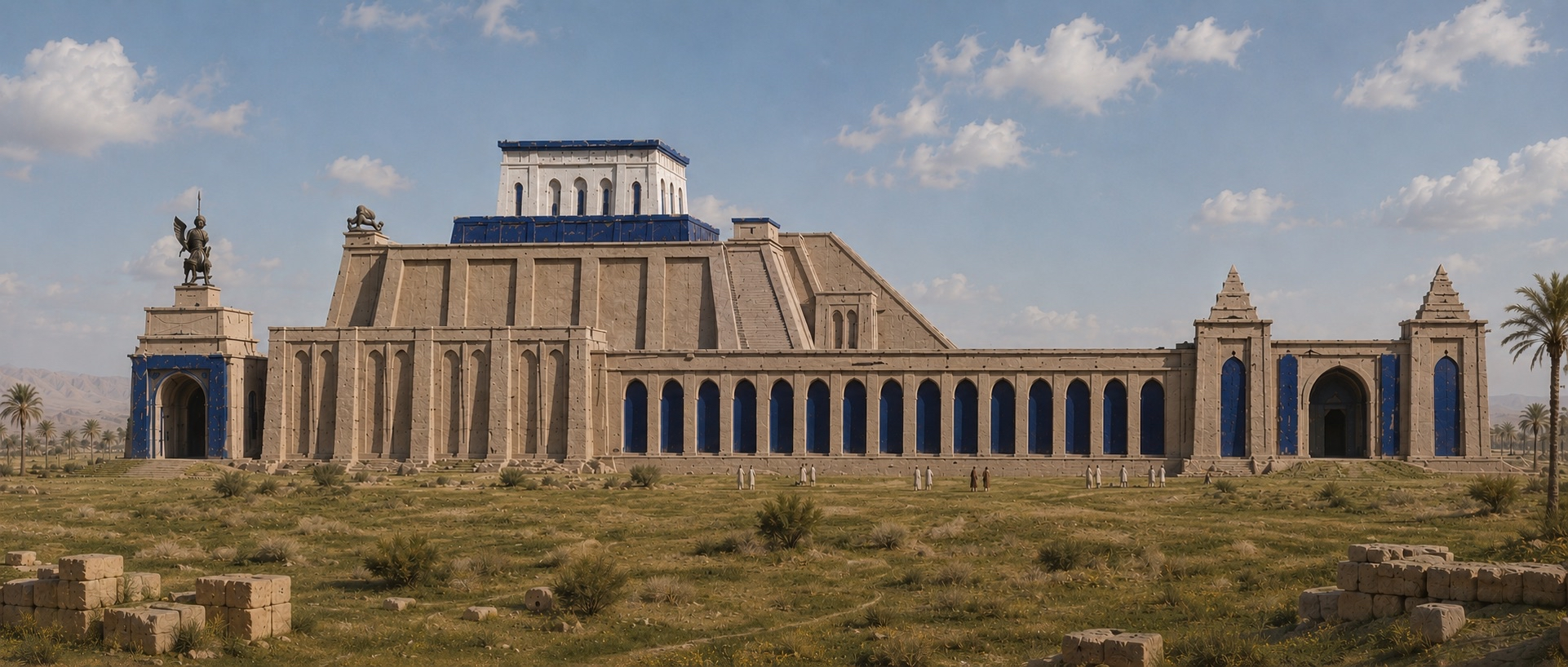 Sharadbēs Temple outside Cyrikon
Philosophy
According to Patrin philosophy, all the matter within the universe is a derivation or mixture of the following six elements:
- Nīmil, meaning sky or air
- Associated with the color white, the West, vultures, and Witen
- Phaes, meaning wood
- Associated with the color black, ants, and Swams
- Phel, meaning water
- Associated with dark blues and greens, the East, animalfish, and Trogmunders
- Undo, meaning stone but also referring to metals
- Associated with light blues and grays, the North, turtles, and Dwarves
- At, meaning clays and soils
- Associated with the color yellow, camels, and Elves
- Zōr, meaning fire
- Associated with the color red, the South, lions, and Men