Patrin Empire
Durzenos (P)
“The Empire” written in the Gindas
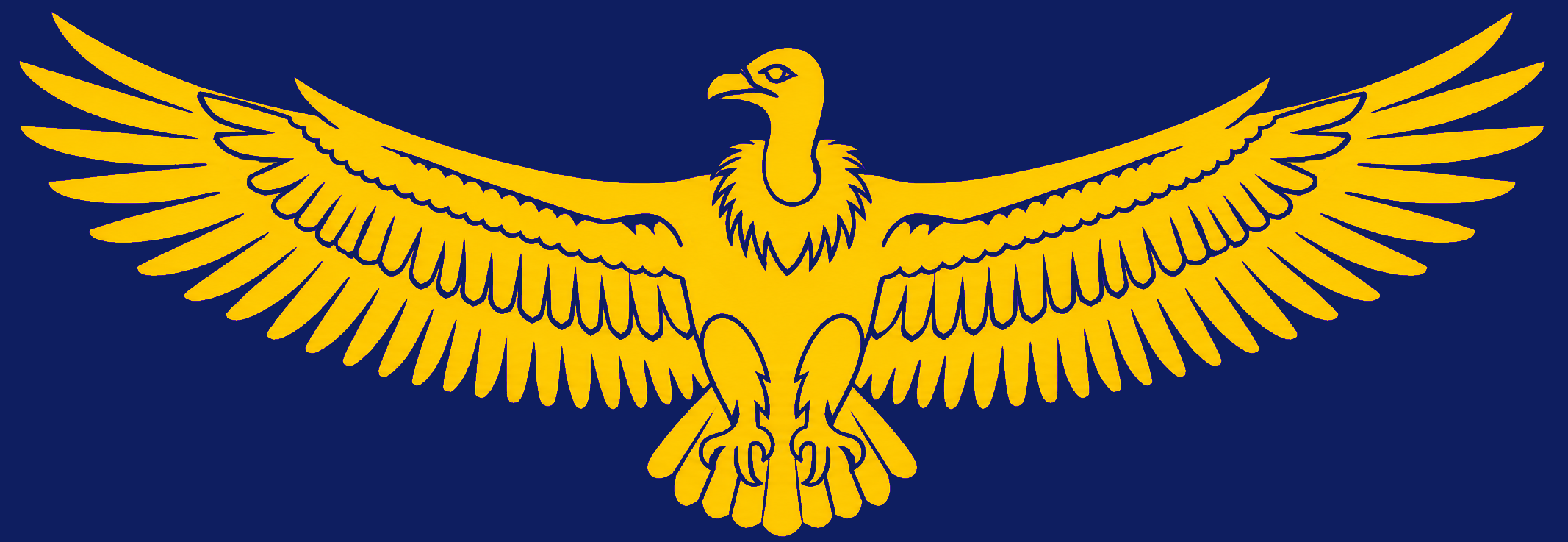
The imperial vulture
General InformationOther NamesThe Empire, Patrinor, Petren Durzenos (P)
Years 553-1133 A.B.
LocationsPatrinor and Rhusagos
CapitalCyrikon (553–670, 777–1133)
Lepon (670 – 745)
Epēshu (745 – 777)RegionsPatrinor
Leponnia, Horat, Rubea, Makagos, Gemenor, Phagal, Sārmath Land
Rhusagos
Empheros, Bībūnor, Sargāzat, Alensis, Garnatos, Green Sea
PeoplePopulationPrimarily Men (Patrin, Gemenites, Lakemen, Ithrim, Westermen), some other Elder Children
LanguagesClassical Paternic, Old Gemenite
GovernancePatermāgor
Imperial Senate
HistoryPreceded byIndependent Māgosh
Succeeded byKingdom in Cyrikon
Eastern Patrin Empire
Umbadic Empire
Pheropic Empire
Alensic Republic

The Patrin Empire, often referred to as Durzenos (“The Empire”) by its citizens, was the most powerful realm of its time. Since the Binding, none have ever exceeded it in might or glory. Even after its collapse, its people, the Patrin, continue to have considerable influence on the Wide World.
Its heartlands were Leponnia and Rubea, the latter of which held Cyrikon the Great, from which most of the Patermāgors (“emperors”) administered their dominion.
In 1124 A.B., the War of the Patrons, a devastating civil war, split the Patrin Empire five ways, a division from which it never recovered.
Geography
The Empire included most of the land about the Great Chasmous Sea, extending in Patrinor (where it had been founded) from Horat Isle all the way to the Sārmath Land in the east. The southern coasts of Rhusagos between the Sargāzat and Bībūnor, and the plains around the Five Fingers, were considered its territory also, for it had founded many colonies and conquered the rest. However, it never ventured into the deserts of the south, preferring to leave the tribes of the Ghahurenes and the Rubenes to their own devices.
Provinces
The Patrin Empire was divided between seventeen provinces, most of which were ruled by surīhurūkh (“governors, consuls”) dispatched from the senate in Cyrikon. These were the following:
- Agos Sārmathīn, the fertile Sārmath Land around the river Lash
- Alensis, the largest island of Rhusagos
- Azru Rabesh, or the Green Sea, in the northeast
- Bībūnor, or Gutterland, south of the Gha-ghīl-Mārosh
- Bībūnor Nadīr, the plains between Bībūnor and the Five Fingers
- Gemenor and Garnatos, the mountain-vales, forests, and colonies east of Gurmindār
- Horat, on the White Sea
- Leponnia Drāmūzīn, surrounding Drāmūz
- Leponnia Kaugrīn, surrounding Lepon and Epēshu
- Leponnia Tanrīn, surrounding Tamaron
- Makagos Aulozekīn, the timberlands of the Empire
- Makagos Rālekīn, east of Rubea
- Nēpau, the estuary of the river Rōdzīr
- Phagal, an island in the middle of the Great Chasmous Sea
- Rubea, containing Cyrikon, Bōlkhar, and the land of Sanen
- Sargāzat, a large sound west of Relkor
- Zhē Nār, or the Lake, being the lands about the Five Fingered Lake in central Empheros
Tributaries
Following the Gutter Wars, the Empire was the suzerain of a number of tributaries in Relkor:
- Herītor, Ishin, and the other city-states of the Ithrim
- The Once-Realm, the remnant of the House of Regimen’s domain
- The tribes of the Westwood
- The tribes of Fost
Cities
The Patrin dwelt in many places in Patrinor, but most of the population was centered around the eight Māgosh, the most influential cities within the Empire:
Blank
The city of Tamaron
- Ākat, or the Oil City, on account of its vineyards and olive orchards
- Bōlkhar, famed for its dyes and textiles
- Cyrikon, capital of the Empire
- Drāmūz, or the City of Banks
- Epēshu, replaced Lepon as the Māgos of the Marble Gulf
- Gizalīs, known for glassware and glyphwork
- Hordon, mother-city of the colonies on Alensis
- Tamaron, has many laserwort plantations
There were also a number of influential cities within the Empire not founded by the Patrin:
- Alensis City, in the south of Alensis
- Iimak-nūs-Ion, once a haven of the Meadow-Elves, but now mostly abandoned
- Kurūgnon, on the Pheropic Gulf in Gemenor
- Līm Haub, built by the Wood Trogs
- Men-Nehet and Nub-Nefer, within the Sārmath Land
- Neth, overlooking the Gates of Neth
- Penthelon, by the Five Fingers
- Zor Barāndo, the largest city of the Dwarves
Trade
The Māgosh were major exporters of marble, dyed fabrics, and both tin and copper, two materials which rendered them functional superpowers when compared to the rest of the known world. Agricultural products, seafood, and cedar wood were gathered by smaller villages along the coast and inland. Wine, silver, spices, wheat, animal goods, and slaves were major imports, with wine coming largely from Horat and the developed colonies in Alensis, animal goods and slaves from Relkor in western Rhusagos, silver and spices from the Home Islands, who traded with the Iōbres Gendesh (“strange peoples”) of the Far West, and grains from the eastern river-valleys of the Sārmath Land.
History
Early Years
The ancestors of the Patrin, the people who would eventually found the Empire, originally hailed from what would become known as Men Mhol, the Wooded Mountain. Near the end of the Last War, following the Isencurse, the Patrin fled from their ancestral home, for it had been burned and occupied by the dragon Sāshar Wingless. That people came to Nīmlaugos and, felling its trees, built a great fleet to cross the sea in. After their departure, Nīmlaugos was ever after known as Pārāgōl, the Escape. The Patrin then came across an island, which they named Phagal, and on it they built the port-town Aegban, the Place of Repair. There they mended their ships. Then they received word of a distant, bountiful shore. So, setting sail once more, the Patrin scattered, founding new cities all along this new land that would soon become the realm of Patrinor. The eight greatest of these cities were called the Māgosh.
Many of the native tribes of Patrinor were displaced by the arriving Patrin. In particular, the Ghahurenes were forced out of Leponnia while the Rubenes were made to leave Rubea. Out of this came much enmity and conflict over the years.
Bībūnor was the first land of Rhusagos rediscovered by the Patrin after their exodus. In the mid-fourth century A.B., a lone fisherman, known afterward as Dun Nurūk, was flung into the sea from his boat by a terrible storm. Later he washed onto a strange shore atop a piece of driftwood. There he was roused by the smell of dead fish tossed onto the beach by the very same storm that threw him to the sea. It is said that, upon his waking, he knew immediately whither he had come. He swiftly brought news of this new land back to Patrinor.
The first settlement of the Patrin in Bībūnor was Īngomes.
Founding of the Empire
In the sixth century A.B., the Māgosh (being at this point independent) had become mighty, being prosperous and with many arms. The leading city of the Patrin at this point was Cyrikon. It was ruled by a senate that itself was divided into two factions: the party of Malagon and the party of Undokhon. Through treachery, Undokhon framed Malagon for acts of treason against the city, executing him and seizing control of the senate body. But Malagon’s son, Palagon, escaped the raid on his father’s house, fleeing to Horat Isle. In his quest for vengeance, Palagon and the sorceress Bernīke Bēlkar gathered many Māgosh to their side, eventually conquering Cyrikon itself. On the steps of Kurūk Khar, the House of the Senate, Palagon declared himself Patermāgor, which means Emperor, of the Patrin Empire.
Great Fire
Blank
The Great Fire in its second day
In its beginning, the Empire was comprised of just the Leponnian Peninsula and Rubea, though Horat was a close ally. The early emperors oversaw a period of peaceful colonization along the coasts of Bībūnor, while the Horatines settled Alensis, and the folk of Makagos and Gemenor explored the Green Sea and Garnatos. Settlers, merchants, and adventurers established new towns throughout these regions, extending Patrin influence without major military campaigns.
The year 669 A.B. witnessed the Great Fire of Cyrikon, a conflagration that was said to have destroyed two-thirds of the capital city. Ghazkhon, the fifth Patermāgor, lost his life after only a year of rule when Kurūk Khar collapsed atop him.
In the aftermath of the fire, the sixth Patermāgor Kagdūk removed himself to Lepon, finding it a more practical seat of government than the damaged capital. That city remained the foremost Māgos for a hundred years. From Lepon, Kagdūk began building the Road that Walks with the Sun, a great highway along the coast meant to link the many provinces and cities of the Empire. Its construction did not end till the time of Ogīkar thirty years later.
Nepotic Conspiracy
Now due to the proximity of Lepon to Horat, the emperors began mingling with the Horatine lords, culminating in the ninth Patermāgor, Aran, wedding one of these nobles, and his children being born on the island. But when Aran grew old there was dissent in the Empire. Some of its cities refused to accept his eldest daughter Gimīlahar as their future empress, for Gimīlahar had been born in a foreign country, been named in a foreign language in her youth, and because they feared Gimīlahar would corrupt Patrinor with a “lesser” culture. After the death of Aran in 735, Gimīlahar reigned for only four years before her nephew, with the support of Leponnia and Rubea, usurped the throne in the Nepotic Conspiracy.
Blank
Siege towers before the walls of Lepon
Gimīlahar then fled to Horat, her motherland. For five years, Tōs-Gither ruled the Empire while the former empress built up her strength. In 744, she struck, ferrying her Horatine armies in secret into the cities Epēshu and Tamaron, for their peoples had remained devoted to her. Gimīlahar moved swiftly, denying Tōs-Gither the time he needed to gather his soldiers from Rubea. The usurper soon found himself trapped, and fled to Lepon. Gimīlahar beleaguered it in 745. That same year, Lepon was sacked, for it refused to surrender. Tōs-Gither was captured and killed, much of the city was razed, its fields were salted, and Gimīlahar was restored to her seat of power.
Thereafter Lepon’s influence over the Empire was greatly reduced, losing its status as Māgos of the Marble Gulf and role as capital of the Empire to Epēshu. It was later abandoned by most of its people, and fell into ruin.
Expansion
Horat and its daughter-colonies in Alensis, though closely tied to the Empire, had maintained their independence for two hundred years. Therefore, following her victory over the usurper, Gimīlahar sought to secure the two island-lands through diplomacy rather than conquest, loving them deeply and believing she could rule them better. Upon her death, her efforts were continued by her daughter, the twelfth Patermāgor, which she completed in 760. For this she took the regnal name Mestelīn (“Islander”).
Afterward, imperial attention turned toward Empheros in the north, then known as Bībūnor. Their colonies had moved along the coast all the way to Rōdzīr, and they desired the fertile plains further up the river, which ended at the Five Fingered Lake.
Blank
The shore of the Five Fingers, which Patrinor wished to conquer
Now that area had long been dwelt in by the Lake-Elves, and out of pride they refused the Empire’s demands of tribute and land. Therefore the Empire sent armies of men over the Great Chasmous Sea, bringing with them swords of sharp bronze and many chariots to drive them out, and most of that people were destroyed or enslaved. The conflict became known as the War for the Lake.
Following the war, the emperor Balakhōr returned the emperors to Cyrikon, seeing that Kurūk Khar had been restored. However, the journey weakened him greatly, and he passed away the following year.
Gutter Wars
After the forty-year peace that comprised the dominion of Elgemek II, the fifteenth Patermāgor (and fifth woman to rule) followed the Gutter Wars. Seventy-five years in length, they were a protracted series of conflicts between the Patrin Empire and House of Regimen, fought over control of the western Sargāzat.
The war began in the second year of the reign of Nen-Hāspis, daughter of Elgemek II, when she launched an invasion intended to win herself glory in the manner of her forefathers.
The campaign met with immediate resistance from Regimen Māgor, who ruled over Relkor and much of the disputed region. Nen-Hāspis was worsted and driven from the field, dying soon afterward from infection. Her son Palagon II continued the war but was slain in battle by Daemar, Regimen’s heir. Having died childless, he was succeeded by his brother Palagon III, who was later captured, paraded in Summarch, and executed by Daeka, daughter of Daemar.
After decades of losses, the Empire finally gained the upper hand under Relkorīn, the twentieth Patermāgor. He decisively defeated Piran the Bad, the last significant king of Regimen’s line, at the Second Battle of Stony Ford, securing the western Sargāzat and establishing tributaries throughout all of Westerland and Fost.
Paternic Peace
The conclusion of the Gutter Wars ushered in the Paternic Peace, a long era of prosperity that lasted for almost a hundred years. While it lasted, the frontiers and tributaries established by Relkorīn in Relkor remained secure. As a symbol of the Empire’s power, Harmūs, who came after Relkorīn, established Ion Ephel in the Far South by the mouth of Tungril. It was the furthest south the Empire ever extended, and made quite wealthy by its nearness to the Home Islands.
In the middle of the Peace was a period of expansion, which was relatively bloodless and did not disturb the Patrin heartlands. During the reign of the soldier-emperor Kaetheskar, imperial armies crossed the frontier and conquered Ākat and Gizalīs of Makagos, and the city-states of Gemenor. The Empire reached its greatest territorial extent under his daughter Sārmathīn, who launched a series of three campaigns into the Sārmath Land, annexing it totally.
The Paternic Peace ended in 970 with the murder of Palagon IV. The Long Decline followed.
Long Decline
Sister-Kings
The extent and might of the realm passed to Palagon IV in the year 965, who was known to be paranoid and struggled with delusions.
Now Palagon IV had a nephew and two nieces, Bōlgash and Drūshin, who were closest in age, and Mēzōriger. They were born of his younger sister, who’d passed away some years ago. Long had Bōlgash and Drūshin desired the throne, but they were content to wait so long as the emperor remained childless, for he was near the end of his middle years.
But in the spring of 970 a son was born to him, and as the Empire rejoiced, Bōlgash and Drūshin despaired. Desperate for power, they crept into his chambers while he slept. There they murdered him, stabbing him thrice each with knives. Then, taking his son from his cradle, who was not even a week old, they tossed him out the window to his death.
To the senate they claimed that the emperor had suffered another fit of madness in the night, killing his boy, and that they revenged their cousin out of love. They were not believed, while they were distrusted, they could not be disproven. Thus Bōlgash, being the eldest, was inaugurated as the twenty-sixth Patermāgor, the first of the Sister-Kings. His dominion marked the beginning of the period known as the Long Decline, wherein the Empire waned till its death.
Bōlgash’s reign lasted only four months before he was betrayed and executed by his sister. During her two-year rule she proved to be very cruel, and, because of her love of indulgence and revelry, she lavished attention on the villas and cities of Patrinor while Rhusagos was ignored and left to rot, and some of the Empire’s tributary states in Relkor broke free.
She was in turn overthrown by her youngest sister Mēzōriger, who revolted on behalf of the peoples she neglected. After a year of captivity, Drūshin met her end when Mēzōriger, last of the Sister-Kings, ordered her flung alive into a pit of vipers. However, Drūshin’s defeat did not restore stability, and the kin of Palagon continued to bicker and plot for many years.
Lospatān the Great and the Wain Plague
The Long Decline was abated for a time after the reign of Sāzhdrag, whose death from illness brought his daughter Lospatān (the thirty-second emperor) to the throne. Remembered as Lospatān the Great, she held the Empire together for forty years, steering it from collapse, though she could not reverse the losses from before. Near the end of her dominion, Lospatān abdicated the throne to her firstborn Elrupor, the first and only Patermāgor to ever do so.
Blank
Lospatān’s villa in Bībūnor
Elrupor was known to be wise and fair; for seven years she ruled well, and Lospatān retired to her palace on the coast of Bībūnor.
In the eighth year following her abdication, Lospatān passed away in her sleep, and the Empire mourned but did not despair, deeming that with Elrupor the Peace had at last returned, yet it was not so. For in the same year as the death of Lospatān the Great, restorer of the Empire and Patrinor, the Wain Plague struck, and the people languished and died, and Elrupor perished.
From this the Patrin Empire did not recover. Ion Ephel was abandoned, and the tribes of the southern deserts became bold, and pressed past the borders to raid the heartlands.
War of the Patrons
The end of the Empire came with the War of the Patrons, a devastating civil war. Upon the death of Arpharaz Unwise, the thirty-eighth Patermāgor, conflict came between his sons Gauron and Drāgis, who’d been named co-emperors. Though neither openly challenged the other, the brothers maintained rival courts and cultivated competing factions.
Five years after, in 1124, Drāgis died unexpectedly. His son Dūlgor accused Gauron of arranging the death, though rumors persisted that Dūlgor himself had engineered the incident to secure his succession. The dispute soon escalated into open war.
The Empire divided between the rival claimants. Gauron retained the support of the western and central provinces, including Leponnia, Horat, Rubea, Bībūnor, Alensis, and the Sargāzat, while Dūlgor controlled Makagos, Gemenor, Garnatos, the Sārmath Land, and Phagal. Taking advantage of the conflict, several powerful surīhurūkh (“governors, consuls”) declared independence, most notably Umbad the Rider, surīhurūk of the Lake.
For nine years the two factions fought across Patrinor. Much of Rubea and Makagos was devastated by raids and campaigns, while repeated battles exhausted both sides. The war culminated in the Battle of Mānūs near the crossings of Rhurnār, where Dūlgor personally slew Gauron in combat. Despite this victory, Dūlgor’s army was routed by Gauron’s sons, forcing him to flee southward. He was later shot through the neck by tribesmen of the Rubenes in the deserts beyond Nagash.
Following Dūlgor’s death, his heirs withdrew to Gizalīs, where they endured a lengthy siege by Nāk-Zōr, Gauron’s eldest son. However, exhaustion and war-weariness had become widespread throughout the Empire. The cities of Leponnia and Horat abandoned the campaign and recalled their armies, depriving Nāk-Zōr of the strength needed to continue the war. After negotiations with Tembregan, Dūlgor’s eldest daughter, a truce was reached.
Afterward
In the west, the descendants of Nāk-Zōr continued to rule from Cyrikon, but their authority was greatly diminished. Rejecting the imperial title, they styled themselves as kings, arguing that an empire divided could no longer truly be called an empire. Over the following centuries their realm steadily contracted. Bībūnor was lost to the heirs of Umbad, Sanen fell to the Ghahurenes, and the Māgosh of Leponnia and Horat named themselves free lands.
Meanwhile the east fared little better. The direct line of Palagon soon became extinct, though its successors continued to claim the title of emperor. These eastern emperors were never recognized by the Kings in Cyrikon, and each state regards the other as illegitimate. Of the lands originally inherited by Dūlgor, only Makagos and Gemenor remain under imperial authority.
Map
 The Patrin Empire’s greatest territorial extent, achieved during the reign of the empress Sārmathīn
Dashed lines indicate lands ruled by tributaries
Etymology
The native term for the Patrin Empire was Durzenos, which can be translated as either “empire” or “military command”. The name comes from the imperfective animate participle of durzen, duzen (“order, command, dispatch”); depending on context, it can mean either “entity being commanded” or “entity giving commands”.