Lepon
General InformationLocationNorthwestern shore of Leponnia, twenty leagues west of Epēshu
TypeRuins
People and HistoryInhabitantsPatrin
EventsSack of Lepon
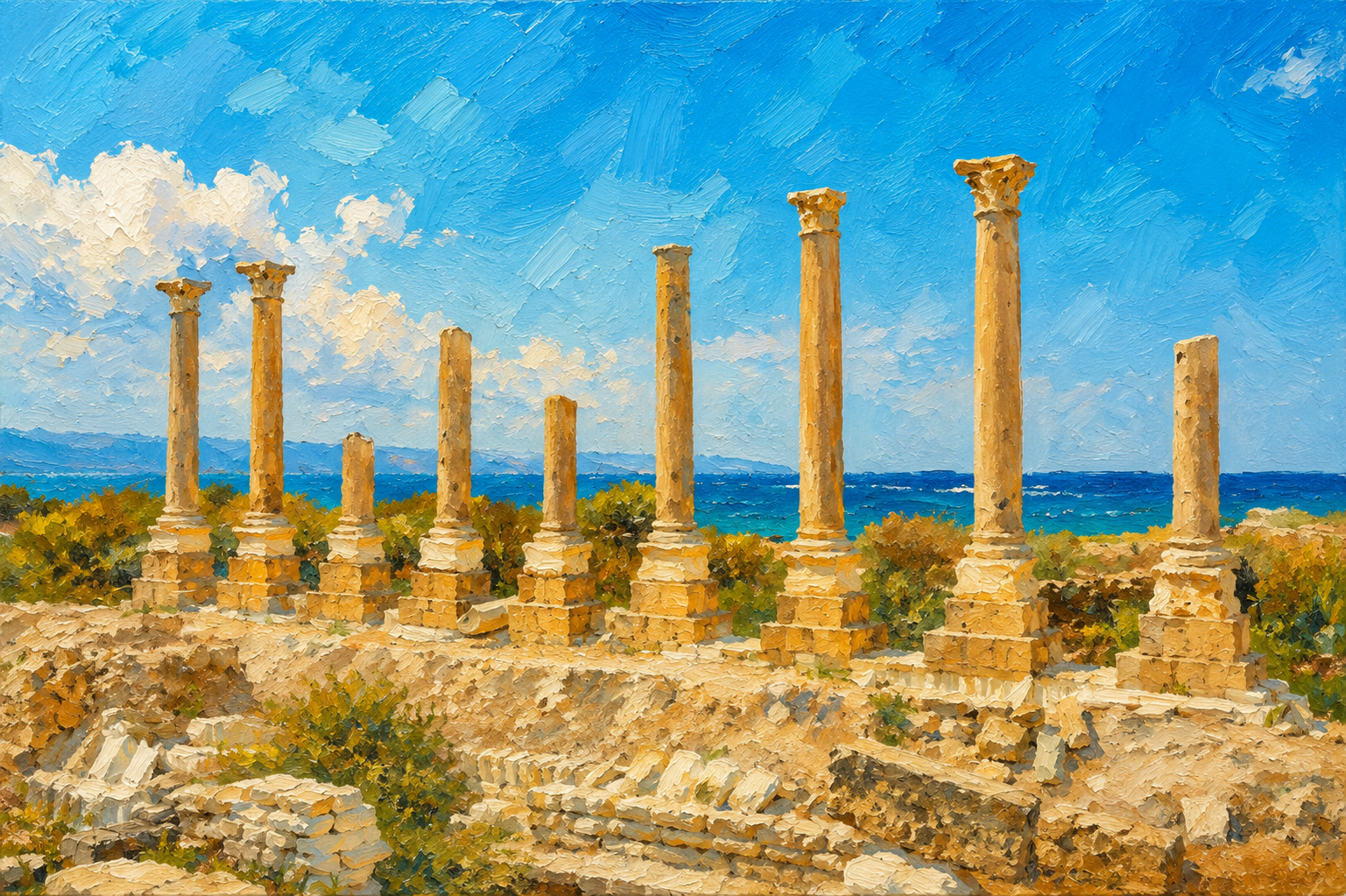
Lepon was a mighty city-state of the Patrin in its time, being held as one of the prestigious Māgosh. It was razed for its role in the Nepotic Conspiracy by Gimīlahar, and later abandoned.
The city was of such influence that the Leponnian Peninsula is named after it.
Geography
Lepon, one of the most important city-states of Patrinor, was located both on the coast of the Marble Gulf and on a nearby island. The island lay about half a mile off the coast, with its landward walls reaching a hundred feet above the sea in places.
Its ruins are roughly fifty miles west of present-day Epēshu as the crow flies, but traveling on foot adds an additional thirty miles, making it a four-to-five-day journey.
History
For many years, Lepon was the dominant power on the Marble Gulf, even as a member of the Patrin Empire.
After the Great Fire of 670 A.B., in which the imperial capital Cyrikon burned down, the Patermāgors removed themselves to Lepon, making it the center of Patrin culture for a period. However, that ended with the Nepotic Conspiracy, in which the usurper-emperor Tōs-Gither rebelled against his aunt Gimīlahar and seized the throne. He reigned for five years before Gimīlahar made her counter-attack. Lepon remained loyal to Tōs-Gither throughout the conflict, becoming besieged by Gimīlahar in 744. After it fell in the Sack of Lepon, Gimīlahar burned its tallest buildings to the ground and executed Tōs-Gither, a cataclysm it never recovered from.
Over time, it was deserted by its people. Some migrated to its rival city Epēshu, which had superseded it in power and influence. Others took its stones and bricks and used them in their own constructions, accelerating its ruin. By the time of the War of the Patrons Lepon was an empty city, with only a meager village surviving beside its overgrown harbor-buildings on the mainland.