War of the Patrons
Date1124 – 1133 A.B.
LocationPatrinor, western Empheros, the Sargāzat, Alensis
OutcomeSundering of the Patrin Empire
Creation of the Kingdom in Cyrikon and the Eastern Patrin Empire
Independence of Leponnia, Horat, and the Empire’s holdings in Rhusagos
CombatantsGauron’s forces
Western Patrinor: Rubea, Leponnia, Horat, Bībūnor
Rebelling governors
Empheros, the Sargāzat, and AlensisDūlgor’s forces
Eastern Patrinor: Makagos, Gemenor, Sārmath Land, Phagal, colonies on the Green SeaCommandersGauron’s forces
Gauron †
Nāk-Zōr
Rebelling governors
Umbad the Rider
Pherop
Meldemil the Black
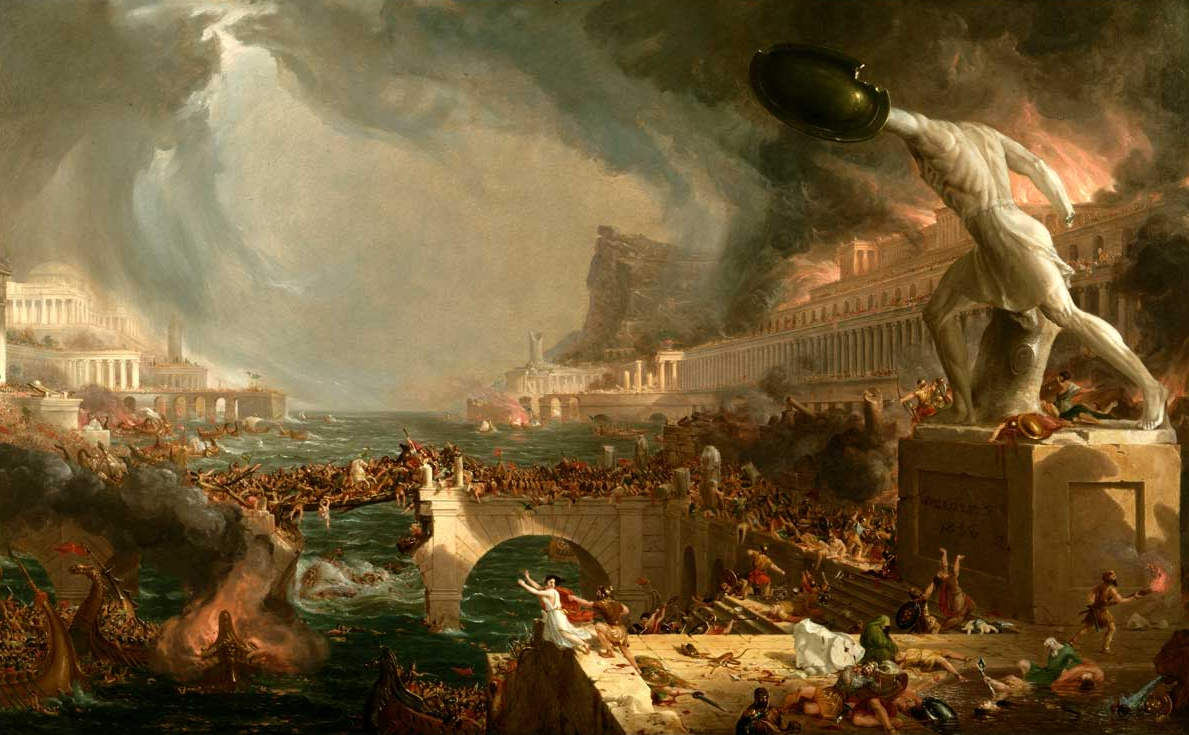
The War of the Patrons was a disastrous civil war in Patrinor, wherein the Patrin Empire, the dominant power on the continent, split between east and west upon the Empire’s two co-emperors turning against one another. In the chaos, the Empire’s holdings in Rhusagos rebelled and declared themselves free. After the war’s conclusion, the Empire dissolved, and the city-states of Patrinor never united again.
History
Background
Arpharaz Unwise was the thirty-seventh Patermāgor. He loved ease and did nothing to maintain the power that he had inherited; and his twin sons, Gauron and Drāgis, he ignored, making no efforts to learn of their character. Hence he was unaware of their rivalry, out of which had already come many grudges and slights. On his deathbed in Cyrikon, Arpharaz named them co-emperors. Drāgis quickly removed to Ākat, for the bulk of his supporters were in the east. Each brother purposed to betray the other, but both bided their time, not assured that they could usurp the throne.
It was in this period, five hundred and fifty years after the creation of the Empire, that the poet Sōter composed the Ekromatkar (“Unifier”), an epic some nine thousand lines long retelling the story of Palagon and Bernīke, who founded the realm. It became a national myth for the Patrin people, providing a sense of cultural unity during a time of imperial division, and glorifying the Patrin ideal of the lone, wise ruler of singular vision.
Blank
An argument between Gauron and Drāgis before the war
Now Gauron and Drāgis read Sōter’s work, but it did not move them, and they considered it only as an instrument of policy. Each entreated Sōter to write poetry on their behalf, offering to finance all his doings in exchange. Sōter sent the following message to both brothers: “I do not forget the royalty of Cyrikon, nor wish that the kin of Palagon should be estranged. Yet the Empire hangs by a thread, and I will not snip it for wages.”
To this Drāgis made no answer. But Gauron was incensed, and he ordered Sōter seized, to the protests of the people. Now the emperor in Ākat saw his opportunity, publicly entreating Gauron to release the poet from bondage. Gauron, quoting the Ekromatkar, replied: “Better to sling the lightning-bolts of Hell than suffer any debt to go unpaid.”
Within the week Drāgis died, having choked on his wine; and his son Dūlgor, who had become yet more spiteful and covetous of power than his father, cried “Murder!” and “Poison!” Gauron claimed innocence, which Dūlgor rebuffed, but in his halls there were whispers that Dūlgor was in secret the true killer.
Civil War
Then there was war in Patrinor. To Gauron came Leponnia, Horat, Rubea, Bībūnor, the Sargāzat, and Alensis; and Dūlgor held Makagos, Gemenor, Garnatos, the Sārmath Land, and Phagal. At that time Umbad the Rider, governor of the Lake, declared his independence and began a campaign against Gauron’s holdings in Bībūnor. Pherop of the Sargāzat and Meldemil of Alensis swiftly followed suit.
Nonetheless, Gauron had the richer lands and more men; but his forces were divided between Umbad and the east, while Dūlgor had only one front to concentrate on.
Gauron and Dūlgor dealt in skirmishes and raids for nine years, and the cities and fields of Rubea and Makagos were ruined. There was a great battle by Mānūs at the crossings of Rhurnār, in which much of the best blood of Patrinor was shed. Dūlgor himself slew Gauron in combat, but Gauron’s sons routed the eastern armies, and Dūlgor was forced to escape into the south beyond Nagash. There he was waylaid by the tribes of the Rubenes, who had many grievances against the Patrin, and they shot him through the neck with arrows.
Nāk-Zōr, eldest son of Gauron, beleaguered Gizalīs, where Dūlgor’s heirs had retreated. They held out there long. Then the governors from Leponnia and Horat grew tired of war, and they betrayed Nāk-Zōr, withdrawing their legions back across Rhurnār to their homes and families. Some days later the children of Gauron and Dūlgor received word of Dūlgor’s passing. Therefore Tembregan, Dūlgor’s firstborn daughter, stepped upon the battlements of Gizalīs and called out to Nāk-Zōr, saying: “Now your father is avenged. Can we not go in peace and hold our debts appeased? This war has been cruel and cold!”
For weariness and fewness of men Nāk-Zōr agreed, returning to Cyrikon. And Sōter, whose beard had turned gray, was released at last from his prison, but he did not write again.
Aftermath
The split between east and west was grievous to Patrinor, for never again was it united in full. The descendants of Nāk-Zōr became mere dynasts and governors out of Cyrikon, and they called themselves kings instead of emperors, saying an empire in part is no empire at all. Their hold over the west was diminished, and in time they lost Bībūnor to the heirs of Umbad and Sanen to the Ghahurenes, and Leponnia and Horat told the Kings they were free.
Meanwhile in the east the line of Palagon ended quickly, though its rulers kept the styling of emperor. They are not recognized in the west. Of all their original domain, only Makagos and Gemenor remain, and even those are slipping away.
Map
 Nīmlad at the height of the War of the Patrons