Lugal
Biographical InformationOther NamesThe Coward, Micklenadder
HoardNaught but bones
LocationFell Mountains
Physical DescriptionRaceDragon
GenderMale
ColorRed-golden
OtherMissing his right hindlimb
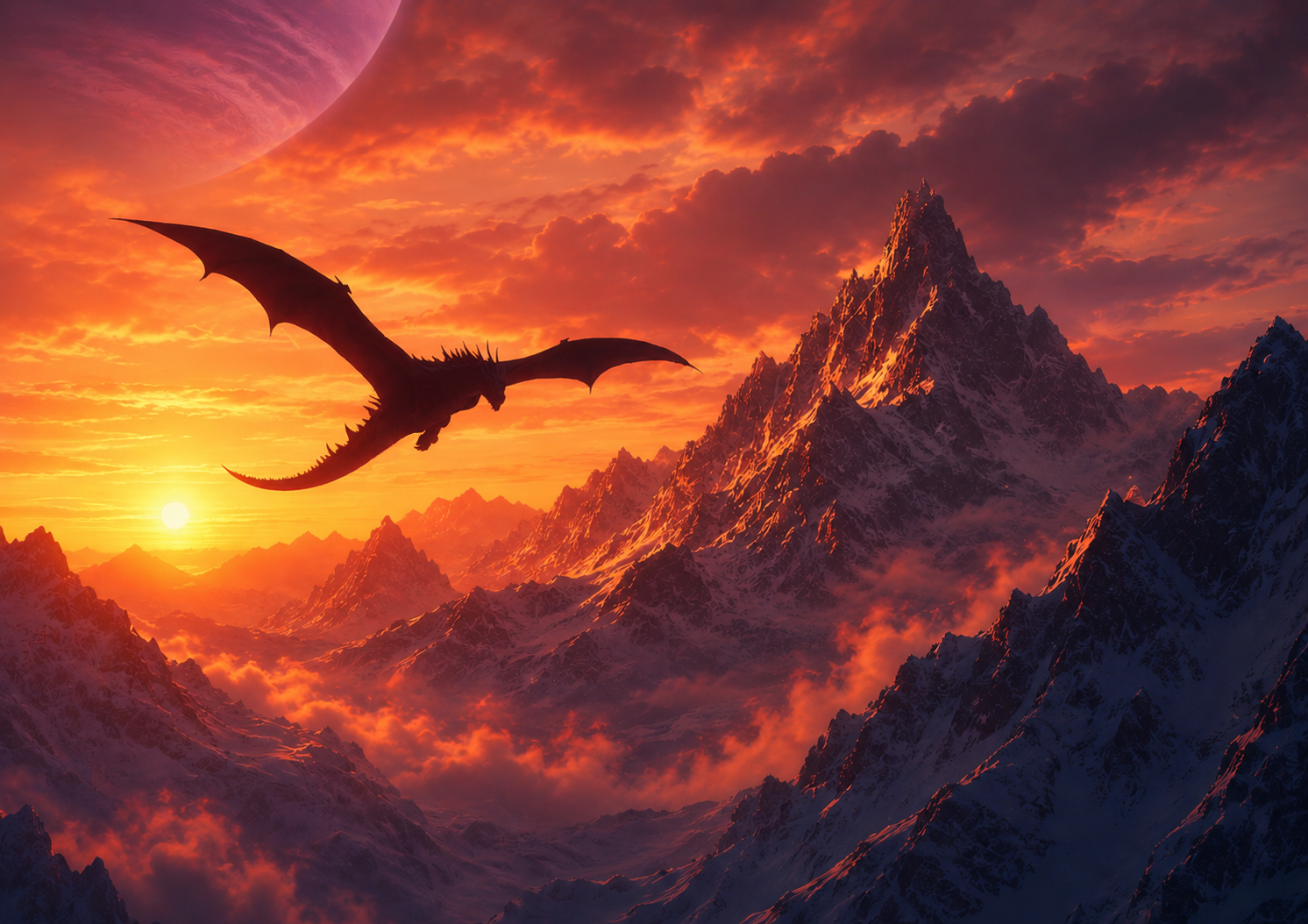
“You think to debate with me, Trog? With my breath I burned down Anīn Lazh. By my claws Gad-beside-Gira was raked and ruined. Old cities… now not even the stones remember them.”
-Lugal speaking to Babar
Lugal the Coward, remembered in folklore as the Micklenadder, is among the last of the Dragons. He fled deep into the Fell Mountains near the end of the Days of Wrath.
History
Days of Wrath
Like the other Dragons, Lugal was made as a preemptive instrument of war by one of the Kembar in anticipation of the Last War. It is likely that the Warlock was his maker, given that Lugal refers to him as his father, and also served him for the majority of the conflict.
At some point during the war, Lugal razed a city named Anīn Lazh to the ground.
The dragon participated in the siege of Gad-beside-Gira, breaking down its gates and smiting its towers. Then in the early hours of the next morning, a counter-attack of Elves and Dwarves came, seeking to relieve the city. Lugal pressed against them and, defeating a contingent of their riders upon the left flank and forcing the gap, began burning all the land at his enemy’s rear.
But the Dwarves of Dorikhos with their great war masks withstood him. Surrounded and hewed at by their axes, Lugal was driven into a rage and slew Tindrock, the Lord of Dorikhos. But with his last stroke the Dwarf-Lord dealt Lugal a grievous wound to his right hindlimb, severing it, and the Dragon fled the plain, leaving the final victory to the remainder of the Warlock’s army.
Afterward Lugal retreated far into the north, taking shelter in the recesses of the Fell Mountains. There, mourning his lost limb, he abandoned the war. This enraged the Warlock, who named Lugal “coward”; yet Lugal was not pursued or punished, as the war occupied all of the Warlock’s mind and power.
After the Binding
For more than a thousand years, Lugal hid in the mountains, surviving on what beasts he could catch in the chill. His despair and shame were great, and his hoard was small.
Sometime in the 10th century A.B., the Elf Wardenhame encountered Lugal during his adventures, though he knew the Dragon as the Micklenadder.
In 1374 A.B., a group of cultists led by the Grandmother, who was secretly in league with both the Coppersmith and the Warlock, tracked Lugal to his mountain lair. There they presented an offer to the Dragon from the two Gods: clemency for his past betrayal in exchange for loyalty and service in the present.
It was in the midst of these negotiations that a band of Allhammers discovered the cultists’ camp. Knowing that if they could win Lugal’s allegiance, they could use him to terrible effect, the party slipped unseen into the Dragon’s den. After a lengthy conversation, Babar the Trogmunder persuaded the Wyrm to neutrality, and the Allhammers departed. Outside his lair, they then engaged and defeated the cult, but they did not uncover the identity of the author behind the plot.
Etymology
Lugal is a Paternic name, meaning “worm, serpent”.
His folkloric name Micklenadder (“Great Serpent”) comes from the Old English words miċel (“great, large”) and nædre (“serpent”), from which modern English adder hails.